Call us now :08071780512
 Send Inquiry

 Send Inquiry
Finolex Optical Fiber Armoured Cable
Price 10 INR/ Meter
Finolex Optical Fiber Armoured Cable Specification
- Usage & Applications
- Broadband network, FTTH, Data Centers, Telecom Infrastructure
- Dielectiric Strength
- High (due to non-metallic strength member)
- Outer Material
- HDPE Sheath (Outer Jacket)
- Diameter
- Depends on number of cores (refer to datasheet)
- Armour Type
- FRP (Strength Member), Armoured for protection
- Number of Conductor
- As per core count (2, 4, 6, 12, etc.)
- Features
- High data transmission speed, high bandwidth capacity, lightweight and compact design, superior tensile strength, suitable for indoor and outdoor installation, future ready, reliable performance
- Standard
- Telecom / Networking Standards
- Core Number
- 2, 4, 6, 8, 12 (as per model)
- Install Type
- Aerial, Underground Duct, Indoor/Outdoor
- Rated Temperature
- Up to 70C (typical for installation and operation)
- Insulation
- Jelly Filled Tube
- Cable Type
- Armoured Optical Fibre Cable
- Tensile Strength
- High, supports sufficient load for aerial/duct installation
- Armored Material
- FRP (Fibre Reinforced Plastic)
- Impedance
- Not Applicable for optical fibre
- Connector Size
- Standardized as per application
- Operating Temperature
- -10C to +70C
- Core Material
- Glass (Silica)
- Weight
- Lightweight (depends on core count and length)
- Conductor Shape
- Round (Fibre)
- Conductor Type
- Singlemode or Multimode
- Conductor
- Optical Fibre (Glass)
- Product Type
- Optical Fibre Armoured Cable
- Length
- Available in standard roll lengths (refer to supplier)
- Voltage
- Not Applicable (Passive optical)
- Insulation Material
- Jelly Filled Tube (for inner protection)
- Application
- Data Transmission, Telecommunication, Networking, Broadband
- Conductor Material
- Glass (Silica)
- Jacket Material
- HDPE (High Density Polyethylene)
- Storage Temperature
- -20C to +60C (typical)
- Connector Color
- Depends on application
- Shield Material
- None (Using FRP for strength)
- Jacket Color
- Black
- Dimension (L*W*H)
- Varies, refer to datasheet
- Color
- Black outer sheath
- Material
- Glass fibre with HDPE and FRP components
- Size
- Standard sizes (refer to datasheet)
- Filling Compound
- Thixotropic jelly to prevent water ingress
- Fire Retardant
- Yes, meets relevant safety standards
- Crush Resistance
- Meets industry standards for armoured cable
- RoHS Compliance
- Yes
- Attenuation
- <0.35 dB/km @1310nm (Singlemode typical)
- Water Resistance
- Jelly-filled for moisture resistance
- Halogen Free
- HDPE outer sheath is halogen free
- Marking on Cable
- Meter marked with brand and technical details
- UV Resistance
- Outer HDPE sheath resistant to sunlight
- Bend Radius
- Minimum 10x outer diameter during installation
About Finolex Optical Fiber Armoured Cable
Finolex Unitube Armoured Optical Fibre Cable
| Product | Details |
|---|---|
| Cable Type | Unitube Armoured OFC |
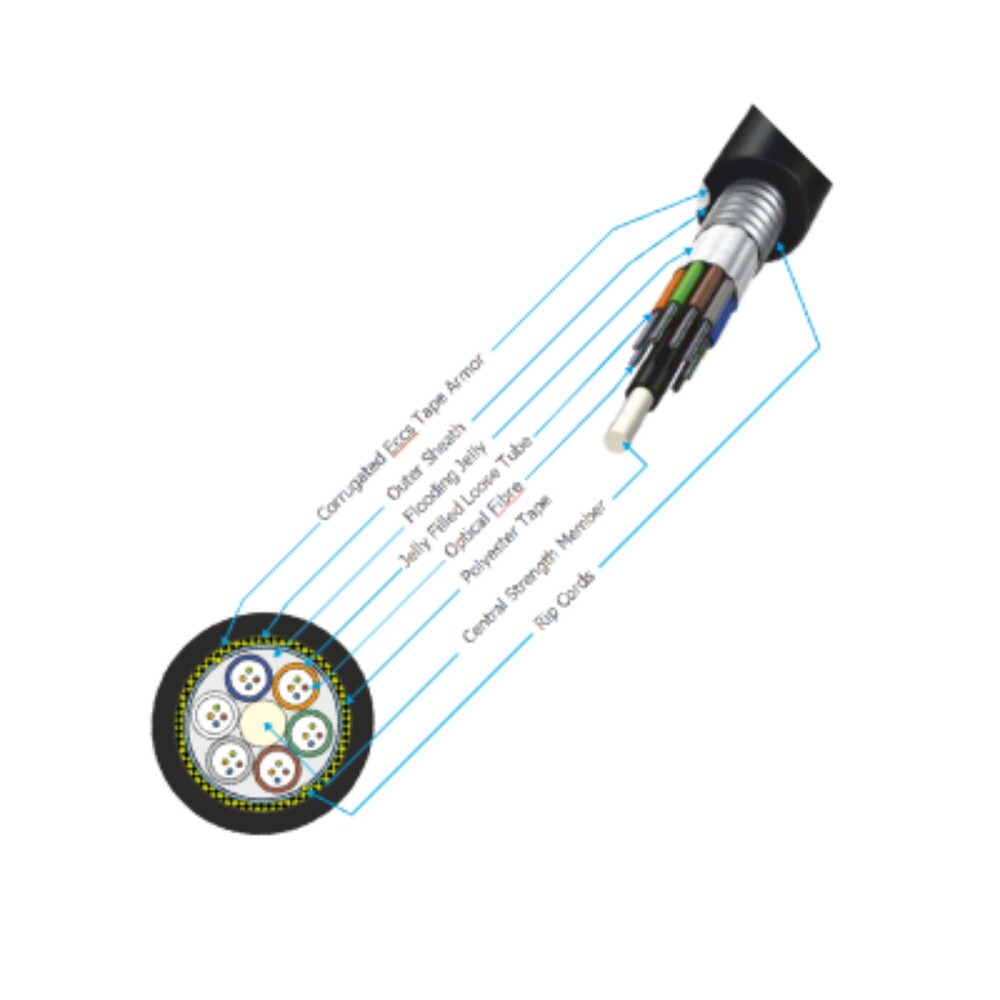
| Construction | Armoured construction for enhanced mechanical protection |
| Core | Optical fibres housed inside a jelly-filled loose tube |
| Protection | Armour provides protection against crushing, impact and external mechanical stress |
| Outer Sheath | HDPE outer sheath |
| Strength Member | FRP strength member |
| Application | Outdoor and underground fibre-optic networks |
| Suitable For | Telecom, broadband, FTTH backhaul, data communication and networking |
| Key Benefit | Reliable fibre protection in demanding outdoor environments |
Main Features
- Armoured construction
- High-speed optical data transmission
- Enhanced mechanical protection
- Suitable for outdoor installation
- Suitable for underground deployment
- Reliable telecom & broadband connectivity
- Durable and easy to deploy
Advanced Construction for Lasting Performance
Finolex Optical Fiber Armoured Cable boasts a robust design featuring FRP armouring and a jelly-filled inner core to prevent water ingress. The HDPE outer sheath resists UV rays, chemicals, and environmental wear, ensuring reliable functionality long-term. Each cable is meter-marked with brand and technical data for easy identification and compliance with network standards. Suitable for the toughest conditions, it delivers strength without excess bulk.
High-Capacity, Versatile Network Connectivity
Engineered to support broadband, FTTH, data centers, and larger telecom infrastructures, this cable delivers high bandwidth and data speeds. With singlemode and multimode variations available in multiple core counts, it adapts seamlessly to specific networking needs. Its lightweight structure and future-ready design make installation and upgrades straightforward for today's and tomorrow's applications.
FAQ's of Finolex Optical Fiber Armoured Cable:
Q: How does the jelly-filled construction benefit the Finolex Optical Fiber Armoured Cable during installation and use?
A: The jelly-filled, thixotropic compound inside the cable prevents moisture ingress, which is critical for protecting the optical fibers from water damage during both installation and long-term use. This feature ensures signal integrity and durability, even in challenging environmental conditions.Q: What safety standards and certifications does this optical fiber armoured cable meet?
A: The cable meets relevant fire retardant and telecom/networking standards, including RoHS compliance and a halogen-free outer sheath. These standards ensure user safety, environmental friendliness, and reliable performance in data transmission applications.Q: When should I choose armoured optical fiber cable over non-armoured varieties?
A: Armoured cables are recommended for installations where additional mechanical protection is necessary, such as underground ducts, aerial spans, or environments prone to physical stresses. The FRP strength member and crush resistance ensure the cable's integrity under pressure or exposure to external forces.Q: Where can the Finolex Optical Fiber Armoured Cable be installed?
A: This cable is versatile and designed for indoor and outdoor applications. It is suitable for aerial, underground duct, data centers, broadband networks, and FTTH projects, providing reliable connectivity across a range of telecom infrastructure environments.Q: What is the minimum bend radius required during installation?
A: The recommended minimum bend radius during installation is 10 times the cable's outer diameter. This guideline helps prevent fiber damage and ensures optimum performance throughout the cable's lifespan.Q: How does the HDPE outer sheath enhance the cable's durability?
A: The high-density polyethylene (HDPE) sheath is resistant to UV rays, chemicals, and mechanical wear. It is also halogen free, adding a layer of safety and preventing toxic gas emissions in the event of fire, all while contributing to the cable's resilience in demanding settings.Q: What are the main benefits of using this cable for telecommunication and data networking?
A: Key advantages include high data transmission speeds, superior tensile and crush resistance, reliable water and UV protection, convenient meter markings for easy deployment, and lightweight, compact design for simplified handling and installation in modern and future-ready networks.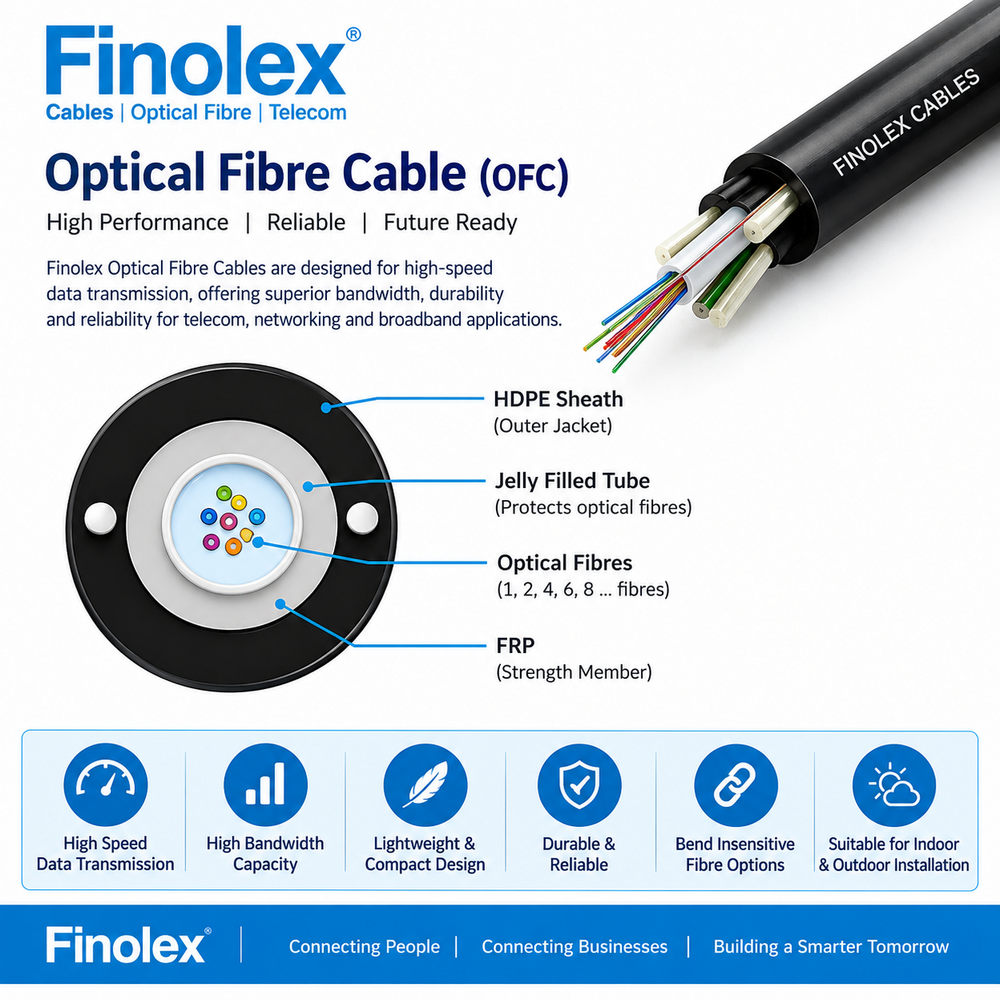
Tell us about your requirement

Price:
Quantity
Select Unit
- 50
- 100
- 200
- 250
- 500
- 1000+
Additional detail
Mobile number
Email

More Products in Optical Fibre Cable (OFC) Category
Finolex MT Armoured Cables
Price 10 INR / Meter
Minimum Order Quantity : 100
Application : Other, Power distribution, Underground Installations, Industrial Plants, Commercial Buildings
Jacket Color : Black
Insulation Material : Other, PVC/XLPE
Conductor Material : Other, Electrolytic Grade Copper
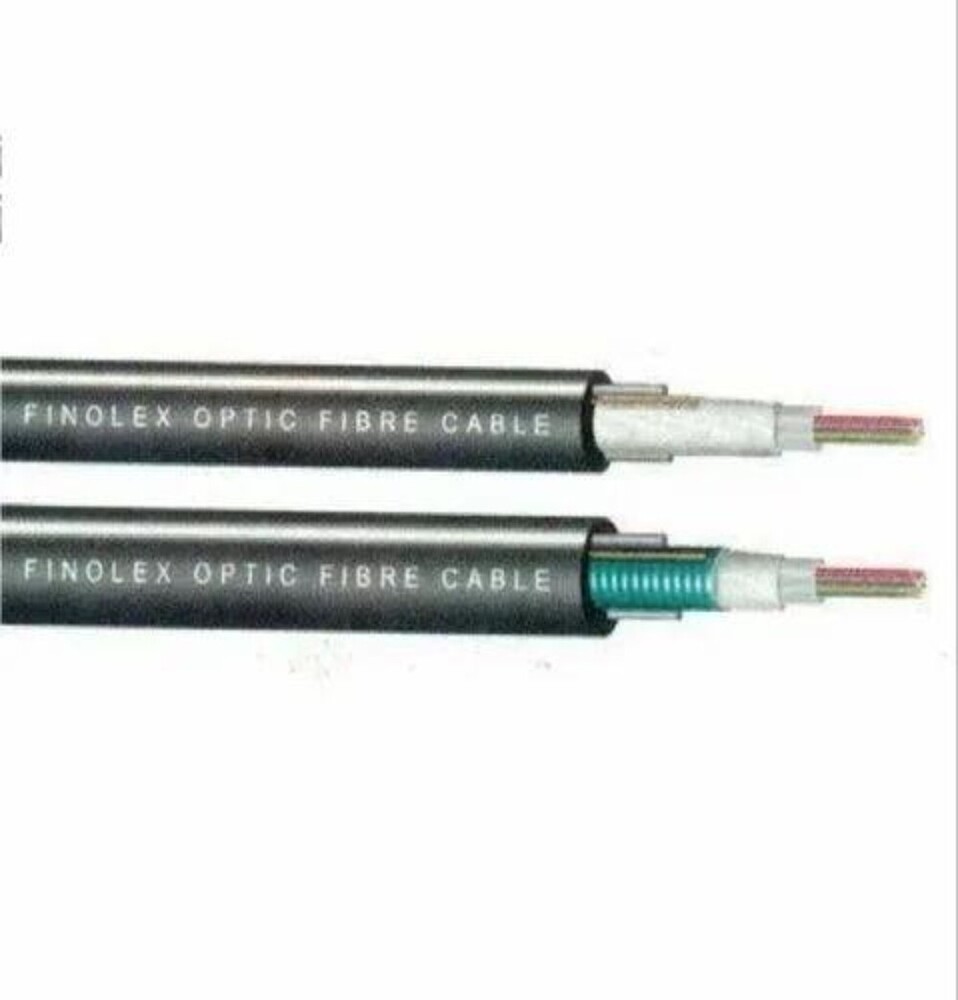
Finolex Optical Fibre Cable (OFC)
Price 45 INR / Box
Minimum Order Quantity : 10 Boxes
Application : Other, Telecommunication, Data Transmission, Broadband, CCTV
Jacket Color : Black
Insulation Material : Other, Polyethylene
Conductor Material : Other, Silica Glass
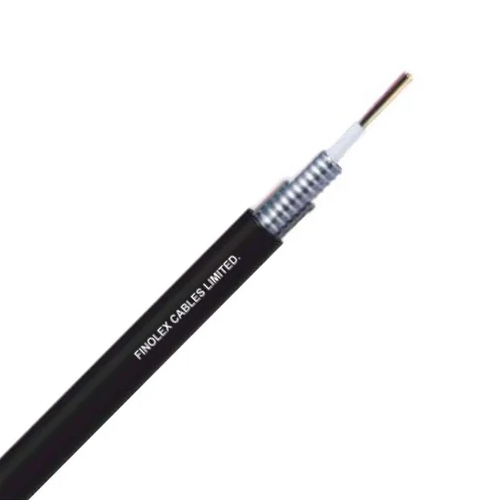
Finolex Cables Unarmoured Cables
Price 10 INR / Meter
Minimum Order Quantity : 100
Application : Other, Power Distribution, Industrial, Residential, Commercial
Jacket Color : Black
Insulation Material : PVC
Conductor Material : Copper

Unitube Unarmoured Cables
Price 35 INR / Meter
Minimum Order Quantity : 2000
Application : Industrial
Jacket Color : Any Color
Insulation Material : ETEE
Conductor Material : Other

 Send Inquiry
Our Products
- Optical Fibre Cable (OFC)
- Telephone Cables
- LAN Cables
- Wires And Cables
- Electric Switches
- Finotouch-Smart Switches
- Feriha Switch
- Premium Plus Switch
- Grazo Switch
- Electric Switchgear
- Miniature Circuit Breaker
- Residual Current Circuit Breaker
- Electric Isolators
- Distribution Board
- Molded Case Circuit Breakers
- Automatic Changeover with Current Limiter
- Insulating Materials
- Speaker Cables
- CCTV Cables
- Coaxial Cable


32 South Block, 6th Floor, Room 615, Ezra Street, Kolkata - 700001, West Bengal, India

Mr Pradip Chakraborty
(Proprietor)
Mobile :08071780512
 Send Inquiry
 Send SMS

Developed and Managed by Infocom Network Private Limited.
